
When the date is not yours, reserve a European vacation week in high season
Somebody else owns the date, the somebody is a calendar rather than a person, and the calendar falls in the local high season. Four weeks answer that, and on two of them the hard half is a telephone call you could make yourself if you have the language and the patience. Here is what the four have in common, where they part company, and what it takes to reserve a European vacation week in high season.
- The week of a Tuscan horse racefrom $3,480 per personit does not exist without an introduction
- A festival week in upper Franconiafrom $3,760 per personit does not exist without an introduction
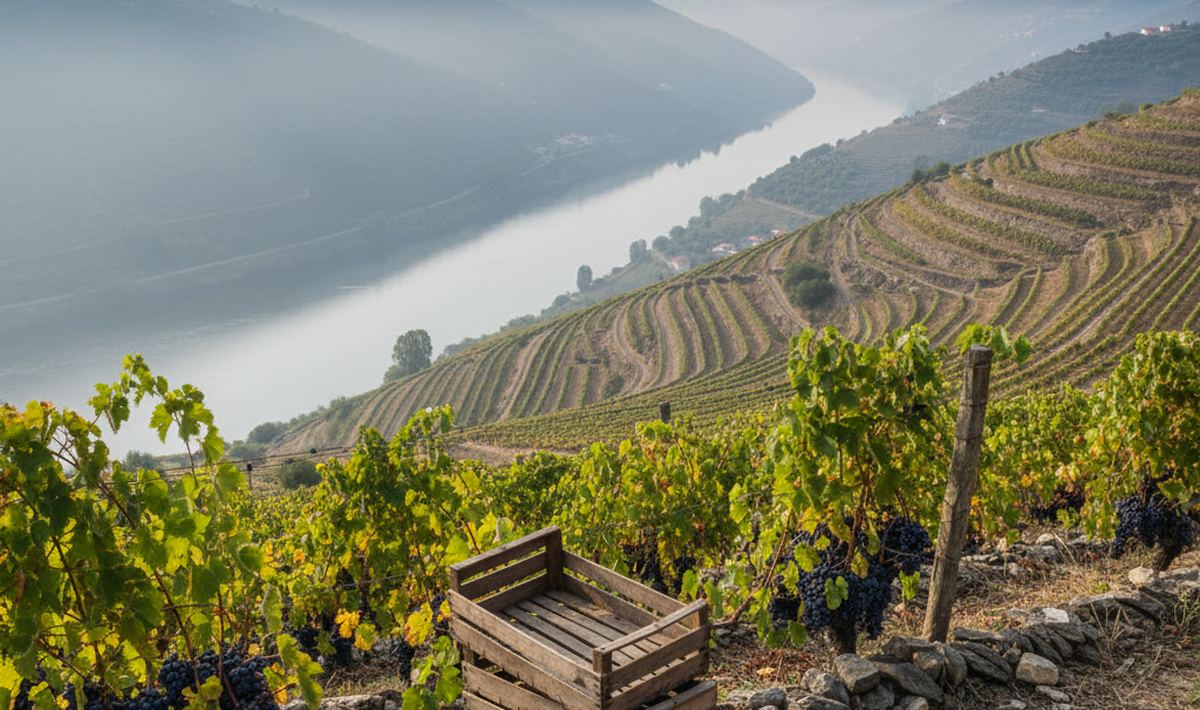
- Harvest weeks above the Dourofrom $2,980 per personthe hard half needs a telephone call
- The Alps in the fortnight everybody goesfrom $3,220 per personthe hard half needs a telephone call
One unbroken stroke means you could do all of it yourself. Four pieces mean it does not exist without an introduction. The written words beside the mark say the same thing, so the mark never carries the meaning alone.
What a fixed date takes off the table
All four weeks are dated by something that will not move for you. A horse race run on the same two summer afternoons year after year. A festival that prints next year's calendar before this year's has finished. A harvest that starts when the sugar in the fruit says so. A fortnight in the Alps fixed by school terms in four countries at once. You are not choosing when to go; you are choosing whether to be there when it happens.
That single fact removes most of the levers. Elsewhere in the catalog, when a room is gone we move the week. Here the week is nailed down, so the only things left to move are the bed, the distance from the bed to the thing itself, and how many nights you are willing to keep it. Rooms within walking distance of it are usually committed nine to fourteen months out, and the ones released late come on terms that suit the owner: seven nights minimum, arrival on a set day, the money due long before you travel.
Prices follow from that: from $2,980 per person for nine nights above the Douro, up to $3,760 per person for eight nights in upper Franconia. None of those figures includes getting yourself to Europe. We do not arrange the flying part and never have.
Where the four stop resembling each other
The four look alike on paper and behave differently the moment you try to hold anything.
Two of them are published to the day. The Tuscan race runs on the same two summer afternoons, and the Franconian festival posts its schedule the previous autumn, so a room can be asked for against an exact night. The Douro harvest cannot be asked for that way: picking starts when the fruit decides, usually inside a fortnight, and the confirmed dates arrive about three weeks ahead. That week is sold as a nine night window rather than a nine night date, with the room held across the swing. The alpine fortnight is fixed by nobody in particular. Nothing can be called off, because there is no event; what fixes it is that several school calendars land on the same two weeks.
Three of the four therefore carry the risk that the fixed thing does not happen. Ground can be declared unfit, a performance can be dropped. The Alps can only be rained on. Beds are nearly level across the set: two, two, two, three. Nights are not: seven, eight, nine, ten. If you are counting days away from work, that is where the difference bites.
What goes wrong here, and the order we deal with it
The failure here is nearly always the same, and it happens before anyone writes to us. People reserve their own flights first, because that is the part that feels like the decision, and then find the beds inside the ring went months ago. What is left is either forty minutes out with a car and a parking problem, or a room over a street that stays awake until two in the morning. The flights have become the fixed point instead of the week.
So we ask for the date before we ask for the country, and we ask what you have already paid for. If the flights are reserved and the date is eleven weeks away, we will describe what is actually available rather than what we would like to be. Sometimes the answer is nothing, and we say that too.
After the date we put the week to two or three suppliers with the fixed night at the head of the message, because that is the line that decides whether they answer at all. We come back with what is held, what is not held, and the terms attached to each, in writing, before you commit to anything. No money is taken here. You settle with whoever holds the room, on their paper, and a percentage reaches us afterwards. That is the whole of our income, which is why we would rather send you away than take a week you did not need us for.
Before you pick one of the four
How far ahead do these four have to be asked for?
For the two with published dates, nine to fourteen months is the honest window if you want a bed you can walk home to; six months usually still buys a bed with a drive attached. The Douro harvest is asked for in spring as a window and confirmed about three weeks out. The alpine fortnight is the one people leave latest; by March what remains is what nobody wanted in January. Write later than that and we will tell you what is left before you get attached to it.
Is one of these four something I should arrange on my own?
Two of them are close. The Douro harvest and the alpine fortnight are marked on this page as weeks where the hard half needs a telephone call: an estate that answers in Portuguese, a valley office that publishes no address. If you have the language and the patience to sit on hold in August, make the calls yourself. You are not paying us either way, and there is nothing we would add to those two weeks except the calls. The other two are marked as weeks that do not exist without an introduction, which describes how the rooms are released, not us.
Why has the week I asked for turned into seven nights, arriving on a Saturday?
Because in these weeks the owner sets the shape of the stay, not the guest. A room that takes two nights in October will take five or seven in the busy fortnight, often with a fixed arrival day, and the deposit terms harden with it. We do not negotiate that away and will not pretend it is negotiable. What we can do is show you the same week with a different bed, which sometimes turns seven nights into four and moves you two towns along. Whether that is a fair swap is yours to decide.