
Four weeks are left, and how to reserve a European trip with two or three beds
You said the dates are yours, that you would rather be moving, and that two or three beds is enough. That leaves four weeks out of thirty-two: Portugal, Spain, Italy and Germany, eight to ten nights, $2,190 to $2,640. Here is what they share, where they part, and how to reserve a European trip with two or three beds.
- Down the Douro by slow trainfrom $2,380 per personyou could arrange all of this yourself
- The Cantabrian coast in three stopsfrom $2,640 per personyou could arrange most of it yourself
- Two towns on the Apulian heelfrom $2,190 per personyou could arrange all of this yourself
- The Moselle bend, three bedsfrom $2,450 per personyou could arrange most of it yourself
One unbroken stroke means you could do all of it yourself. Four pieces mean it does not exist without an introduction. The written words beside the mark say the same thing, so the mark never carries the meaning alone.
Four weeks, few beds, and one number the office prints against itself
Nine nights on a Portuguese river line, ten along a Spanish coast, eight between two Italian towns, nine inside a bend of a German river. Three of the four use three beds; the Apulian week uses two. Prices run from $2,190 to $2,640 a person, so neither the money nor the length is what tells them apart. What they share is less obvious, and it does not flatter us. Every week here scores a one or a two on the scale we print on its page: all of it yourself, or most of it yourself. Nothing in this corner reaches the step where a telephone call is the only way in. That follows from the shape of the thing. Three beds means three reservations, four or five tickets and two moves; a week with that few joints has that few joints to fail, and very few places where knowing somebody matters. If you have put a European fortnight together before, you can put any of these four together, and on the Douro and Apulian pages we say so in as many words.
The distance between the beds is the whole difference
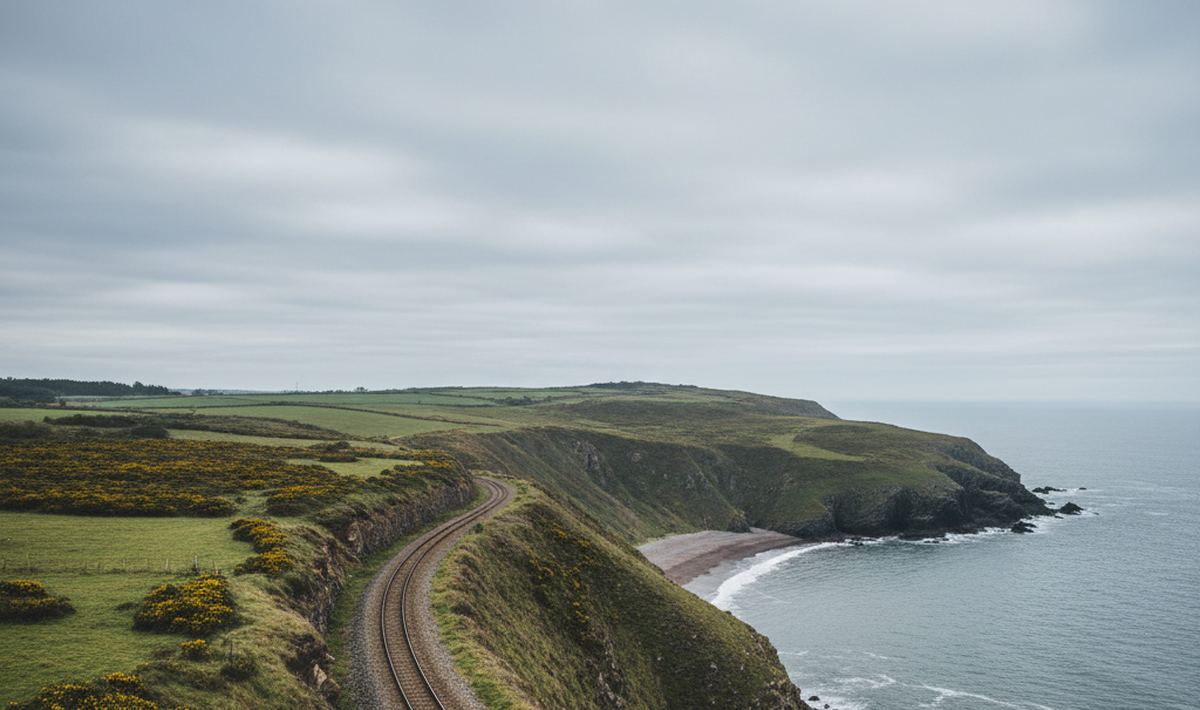
On the Apulian week there are two addresses and eight nights, so each one holds you for three or four nights and the single move between them is about an hour of regional train. The Moselle week keeps its three beds inside one loop of the river; two of its moves are under forty minutes, and the week is really made of the days out rather than the moves. The Douro line runs one way down a valley, so the three beds sit in order along one railway and nothing doubles back on itself. The Cantabrian week is the odd one for distance: the same three beds, but the coast is long, and two of its three legs take between two and three hours with a change in the middle. That is the variable worth holding in your head, and it is not the country or the cooking or the price. It is how much daylight each move eats, and whether you would rather spend that daylight on a platform with a paperback or arrive at four in the afternoon with the light already going.
What goes wrong here, and the order we work in
The same thing goes wrong in this corner nearly every time, and it is arithmetic rather than luck. People count nine nights and plan nine days. Two of those days contain a move, and a move with a checkout at ten and a check-in at three is not a day at all; it is two half days with luggage in the middle. A week of three beds quietly becomes six usable days, and nobody notices until the fourth morning. The second thing is order of work. Beds get picked first, from photographs, and the timetable gets read afterwards. Then the branch line turns out to run four times a day with the last useful departure at 18:20, and the guesthouse in the second town takes arrivals until eight and not after. Small places lock their doors. So we work the other way round. Moves first, with real arrival times written down; then beds that will still be open when the train actually gets in; then a written answer from each address about a late arrival, kept on file. We count the usable days and put that number in front of you before you decide anything. Your own flights remain yours to hold, and we do not touch them.
Before you pick one of the four
Two of these four say I could arrange them myself. Why print that?
Because you asked three questions and these are the four answers, and dropping the two we add least to would make this a shorter list, not an honest one. There is also a difference between being able to arrange something and wanting to. Some people would rather hand over three reservations and a timetable than sit up doing them at eleven at night, and that is a fine reason to call. We will take the work and be paid by the supplier for it. We will not pretend the week needed us to happen.
Do you reserve the flights?
No. This office arranges no carriage by air or sea, holds a contract with no carrier, and will not advise you on that part of it. What we do need from you is the dates and the times you land and leave, because they decide which town the first bed is in and which town the last one has to be in. Get those two wrong and a nine night week loses a morning at each end. Send us the times when you have them and we will build the rest around them.
Can I keep the week and change the bed count?
Fewer nights is usually workable, though on these four it tends to remove a whole town rather than a night here and there, because the beds are already few and each one has to earn its place. More beds is a different answer to the third question, and it belongs on the other shortlist, so we would rather point you there than quietly bend one of these into a shape it was not built in. Tell us which of the two you meant and we will say what it does to the price.