
Three beds or six, and what changes when you reserve a moving trip with a Kansas City travel agent
You have already said the week is yours to pick and that you would rather be moving than settled. What is left is the room. Two or three beds in seven nights, or a new one most nights, and the answer changes nearly everything downstream when you reserve a moving trip with a Kansas City travel agent.
Why the room comes before the map
Most people expect to be asked where. Where is the easy part, and it narrows on its own once the shape of the week is fixed. The room is what fixes it. How often the bed changes decides how far a day can reach, what size bag is sensible, whether laundry happens in a machine or in a sink, and how much of each afternoon goes on transit rather than on being somewhere. It also decides how much of the week can be held with an email and how much of it needs a person to ring a landline at nine in the morning, local time. We ask it third because the two questions before it are about you and this one is about the week. Those two have already taken thirty-two weeks down to eight; this one leaves four, and there is nothing after it. There is no list at the front door for the same reason. Thirty-two rows would give you every week in the catalog and no help with any of them, and the help is what the office is for.
Two or three beds, and what that settles
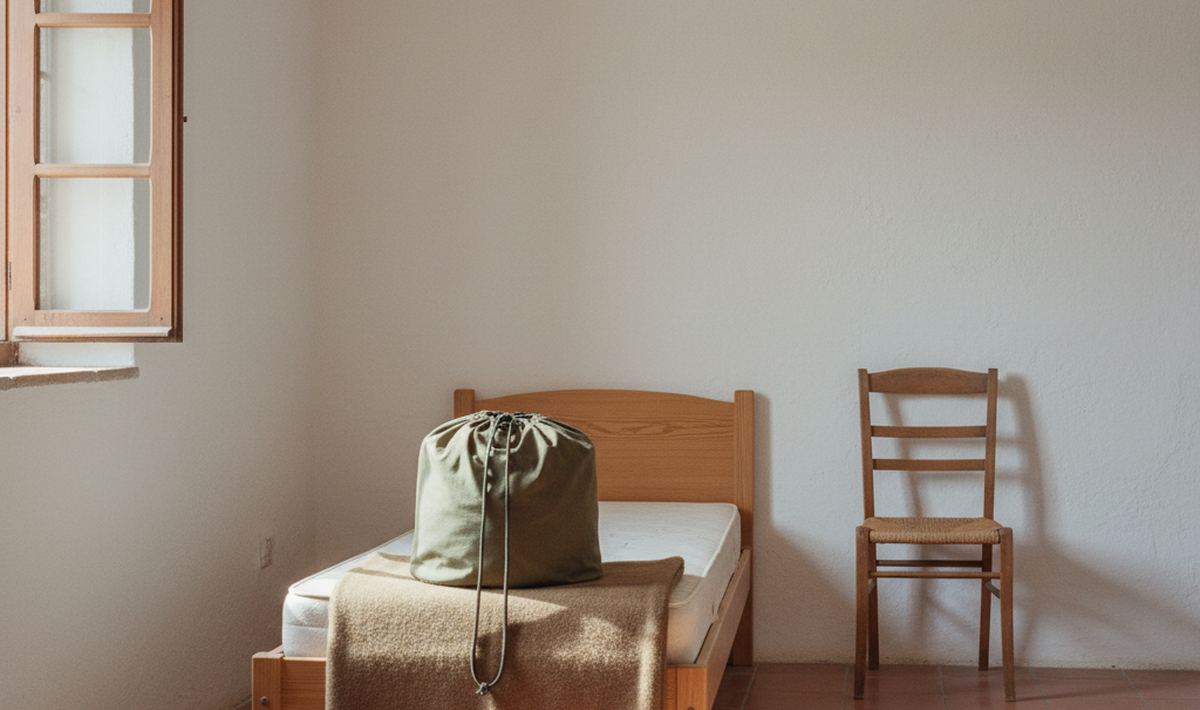
Two or three beds in seven nights means you unpack. The bag goes into a corner on the first evening and stays there for two or three days, which changes several small things and one large one. Small: you buy fruit, you find the bakery on the second morning instead of the last, you leave the heavy boots in the room and take the light ones. Large: every day becomes a loop. You go out and you come back, and the final ninety minutes of the afternoon belong to the return rather than to the place. Bases sit about two hours apart, three nights each, and the ground you cover is a circle around each one instead of a line across the map. What this does to the honest number on each week is worth saying plainly. Two or three rooms in one region, arranged directly, is an evening's work for anybody who has done it once, so most weeks behind this door are marked as things you could arrange yourself, and several are marked as things you should. That mark sits next to the price on the week, not in a footnote.
A new bed most nights, and what it asks of you
A new bed most nights means the bag is with you at breakfast. Nothing gets left behind, nothing gets bought that will not fit, and laundry is a sink and a radiator. In exchange the day becomes a line instead of a loop. You finish the afternoon somewhere you have not slept, and the evening walk is always new ground. The cost is precision. Seven rooms in sequence means seven arrival windows, and one late train or one wrong turn out of a valley moves every one of them. Rooms in small places often hold a key until six and then go home for supper. Distances get cut back to what fits between an unhurried breakfast and a four o'clock arrival, which is usually less than people guess, and correcting that is the ordinary work of a draft. The honest number tends to sit further along the scale behind this door. A chain of rooms held in order, with somebody willing to pick up the telephone when the third night moves, is where a call earns its keep.
Asked before you commit
Why beds and not miles?
Miles are a consequence, not a decision. Two people can cover the same three hundred miles in a week and have nothing in common, depending on whether those miles are spread thinly over six mornings or spent in two long moves with days on either side. Beds tell us the shape, and the miles fall out of the shape afterwards. Asking about distance first produces a number that sounds decisive and settles very little, and we would still have to come back and ask this question.
What if the honest answer is four?
Four beds in seven nights is real and it happens, usually as two nights, two nights, one, two. Pick the door that describes the hardest night rather than the average one. If there is a morning where the bag has to be packed before breakfast and carried until dark, answer as many as it takes, because the weeks behind that door are put together to survive it. If every move is between rooms in the same valley, take the other door. Either way, we say so out loud when the week in front of you does not match the answer you gave.
Can I go back and pick the other one?
Yes, and people do, usually after reading two weeks and discovering what the second question really meant. Nothing here is a form, nothing is stored, and the back arrow is the whole mechanism. What the site will not do is put both sets in front of you at once. Four weeks is a number an adult can hold in their head on a Tuesday evening; eight is a list again, and thirty-two is where we started.